This site contains affiliate links. I may earn a small commission, at no extra cost to you.
Published on 20/08/205 & updated on 02/05/2026.
If you’ve been dealing with acne and feel like nothing is really working, azelaic acid is one of those ingredients that’s definitely worth knowing about.
It’s one of the few actives that can help with breakouts, redness, and post-acne marks all at the same time, and it’s generally a lot gentler than things like retinoids or strong acids.
In this post, I’m going to break down the difference between azelaic acid and retinol, whether you should go for a prescription or over-the-counter azelaic acid, side effects, and how to use it properly. I’ll also share the best azelaic acid products, both prescription and over-the-counter, as an azelaic acid user of almost three years.
I’ll also specify which of my product recommendations are suitable for other skin types, such as rosacea-prone skin, sensitive skin, and perioral dermatitis.
What Does Azelaic Acid Help With?
Azelaic acid is so popular because of its anti-inflammatory and antioxidant properties.
Essentially, it works by getting rid of dead skin to unclog pores, killing acne-causing bacteria, and reducing tyrosinase activity to diminish dark spots.
It can help with multiple skin concerns, including:
- Acne: It helps reduce breakouts by keeping pores clear, killing acne-causing bacteria and calming inflammation.
- Redness: Azelaic acid has anti-inflammatory properties, so it can help calm redness and irritation, especially if your skin is quite sensitive.
- Post-Acne Marks: It helps fade the appearance of dark spots, including post-inflammatory hyperpigmentation, making your skin tone look more even over time.
- Rosacea: Because it’s so calming, it’s often used to help manage redness and bumps associated with rosacea.
Azelaic Acid vs Retinol for Acne
I’ve noticed that, since azelaic acid and retinoids have both become more popular recently, people have confused them a little. They are both very effective treatment options, but for different things, and they work very differently.

They are both topical treatments designed to help a number of skin conditions, including acne, acne marks, clogged pores and uneven skin tone.
Azelaic acid is a dicarboxylic acid, which is basically a naturally occurring acid within our skin and helps with acne through its antibacterial properties and by keeping hair follicles clear with a very mild exfoliating effect. It’s also keratolytic, meaning it helps to normalise skin cell shedding that may contribute to clogged pores.
Retinoids are a type of skincare product that utilises vitamin A‘s beneficial effects. They work by increasing skin cell turnover and keeping the hair follicle clear from dead skin cells, sebum and debris that may cause clogged pores or inflamed acne. It also boosts collagen synthesis to reduce the appearance of fine lines and sun damage.
As you can see, they work very differently. This is why I use them both in my routine on alternate days.
Retinoids are far more powerful for acne management, on the whole. If you’d like to learn more about retinoids, download my retinoid guide.
Do You Need a Prescription for Azelaic Acid?
No, not always. You can get azelaic acid both over the counter and on prescription; it just depends on the strength.
What makes azelaic acid a prescription is its strength, what the product claims to treat, such as acne or rosacea and local regulations.
Is Prescription Azelaic Acid Better Than Over-the-Counter?
You can get 15-20% azelaic acid in both prescription and non-prescription formulas. All in all, it doesn’t really matter if you use a prescription or not, and you can still get the benefits of azelaic acid over the counter.
I personally use Finacea Gel, which is a prescription, because I saw a board-certified dermatologist and she prescribed it to me. Since it works well for me, I don’t bother changing it.
I also quite like using prescription products because, since they’re classed as medications, they don’t tend to get discontinued or reformulated randomly like over-the-counter products.
What Strength Azelaic Acid Should I Use?
When choosing the right azelaic acid strength, you should be aware that it is not equivalent to retinoids, which tends to be a common source of confusion. It is true that higher concentrations are more likely to be effective for:
- The treatment of rosacea
- Post-inflammatory hyperpigmentation
- Appearance of dark spots
However, you can still get good results at 10%. Another misconception is that you need to start low and ‘move up’ continually. You don’t need to do this; you can choose either 10 or 15% and most probably be fine. If you like the results, you don’t have to move up at all, ever!
My only advice is probably not to start at 20% because azelaic acid can cause some itchiness, and it probably will be a little uncomfortable if you start on 20%, but 15% could easily be fine. It’s really up to each individual’s skin.
Side Effects of Azelaic Acid Cream
Before you use azelaic acid, you should know about the main side effect, which is tingling and itching.
Personally, I never experienced this side effect, but it is quite common. It’s nothing to be alarmed by and should go away with continued use. Other common side effects include mild burning, dryness and redness.
Facial swelling, however, is not a side effect and would indicate an allergic reaction. I recommend washing it off immediately and seeking medical help if this happens.
If you get bad itching with 15%, for example, you may want to try getting your skin used to a 10% formula for a while.
The Best Azelaic Acid Products for Acne-Prone Skin
Realistically, any azelaic acid cream, gel or serum is a good option for acne-prone skin, so try not to stress too much about which one you pick.
Still, I’m happy to help you make your decision. I’ll start with what I personally use, which is a prescription-strength formula.
Best Prescription Azelaic Acid
You can either get prescription-strength azelaic acid from your GP or an online pharmacy.
Here are my favourite ones:
1. Finacea Gel 15%
Finacea Gel 15% is the one my dermatologist recommended to me, and I find it really easy to use and get along with.
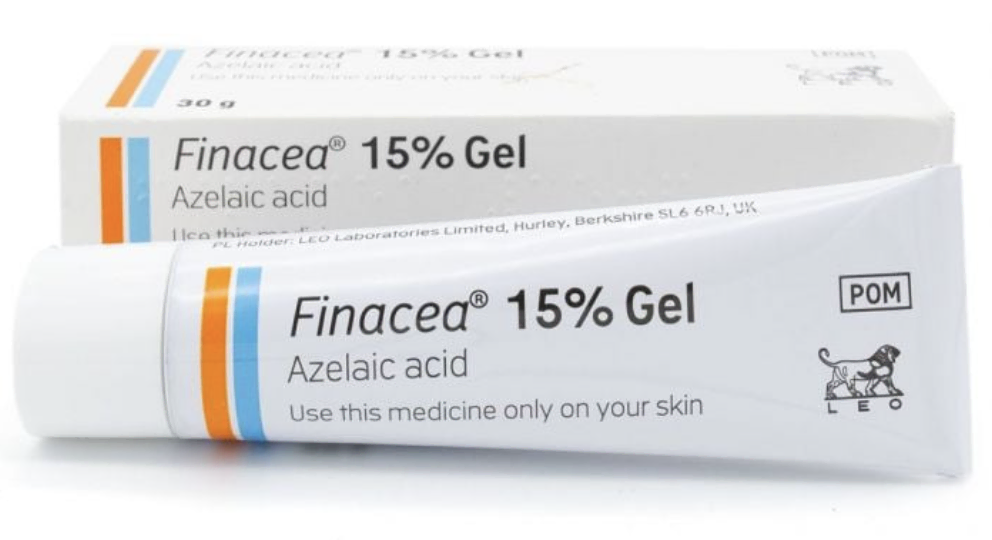
I really notice its anti-inflammatory properties because it helps calm my perioral dermatitis so well, and helps me tolerate my retinoid with less skin irritation.
My skin texture was already quite smooth, so I can’t say it has changed that too much, because my retinoid keeps it in check. However, my friends who use it have also reported back to me that it’s done a lot for their texture.

It’s a white ‘gel’ that actually looks more like a cream. I apply a pea-sized blob after cleansing, every other day.
I prefer to use it in the evening because I do notice it sometimes leaves white ‘streaks’ on my face. Not ideal, but it’s so worth it for me as they kind of ‘melt’ away with other serums anyway.
2. Skinoren 20% Cream
Skinoren 20% cream is another popular prescription azelaic acid cream that’s often used for rosacea symptoms and acne management.

I haven’t personally used it, but I often read good things about it on Reddit.
20% is the strongest azelaic acid you can get, and, although it does sound quite high, azelaic acid is overall quite a gentle active. So all in all, I wouldn’t be scared if you have been prescribed it.
Best Over-the-Counter Azelaic Acid
Over-the-counter azelaic acid can be just as effective as prescription azelaic acid for acne-prone skin and uneven skin tone. This is because you can get the same strengths in both over-the-counter and prescription ones.
Try these:
1. Dermatica Clarifying Azelaic Acid 15% Cream
The Dermatica Clarifying Azelaic Acid 15% Cream is one of the most popular topical azelaic acid creams available. There was a shortage a couple of years ago, and people were in uproar!

In general, I really like Dermatica’s own brand skin care products. They focus on quality formulas and active ingredients.
I’d say 15% is a really good place to start if you’re new to azelaic acid. I probably wouldn’t jump straight in at 20% unless it’s been prescribed, but most people should get on well with 15% as a starting point.
2. Theramid AZID 15% Azelaic Acid
I think the Theramid AZID Azelaic Acid 15% is one of the best azelaic acid products for sensitive skin or perioral dermatitis, because it’s in a soothing base formula.
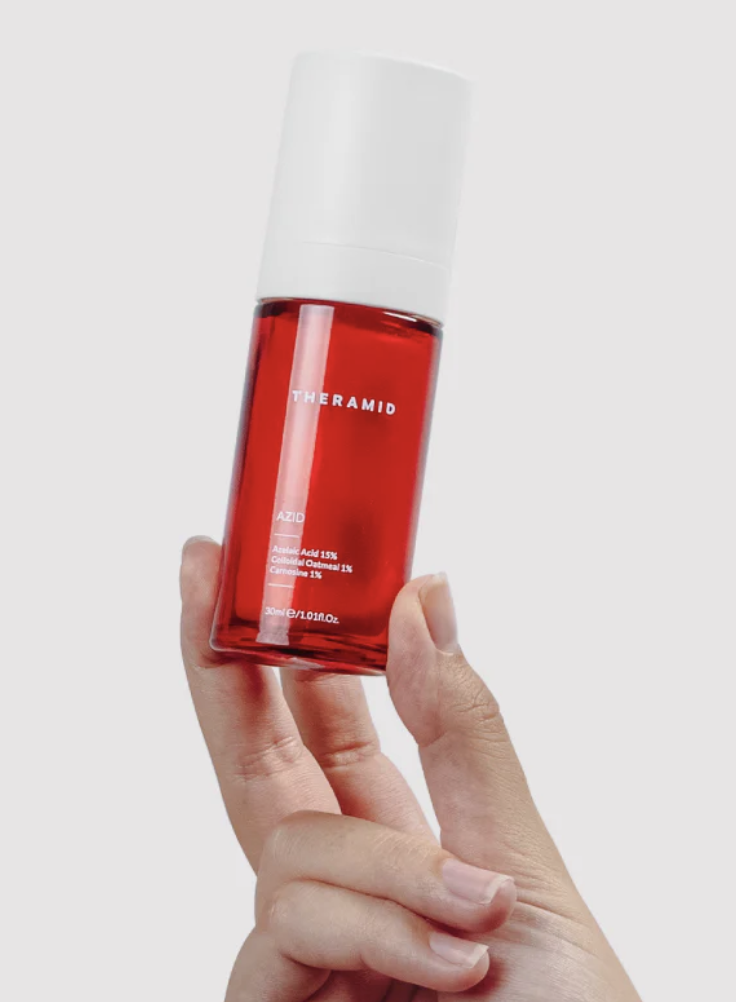
In all honesty, azelaic acid is quite a difficult skincare ingredient to formulate with, often becoming grainy or leaving white smears on the face.
This means you may not find one that’s super hydrating on its own, but this one probably comes the closest because it contains oat and ceramides.
3. Inkey List 10% Azelaic Acid
The Inkey List makes good skincare products on the whole, and this Inkey List 10% Azelaic Acid gel is a good budget azelaic acid option.
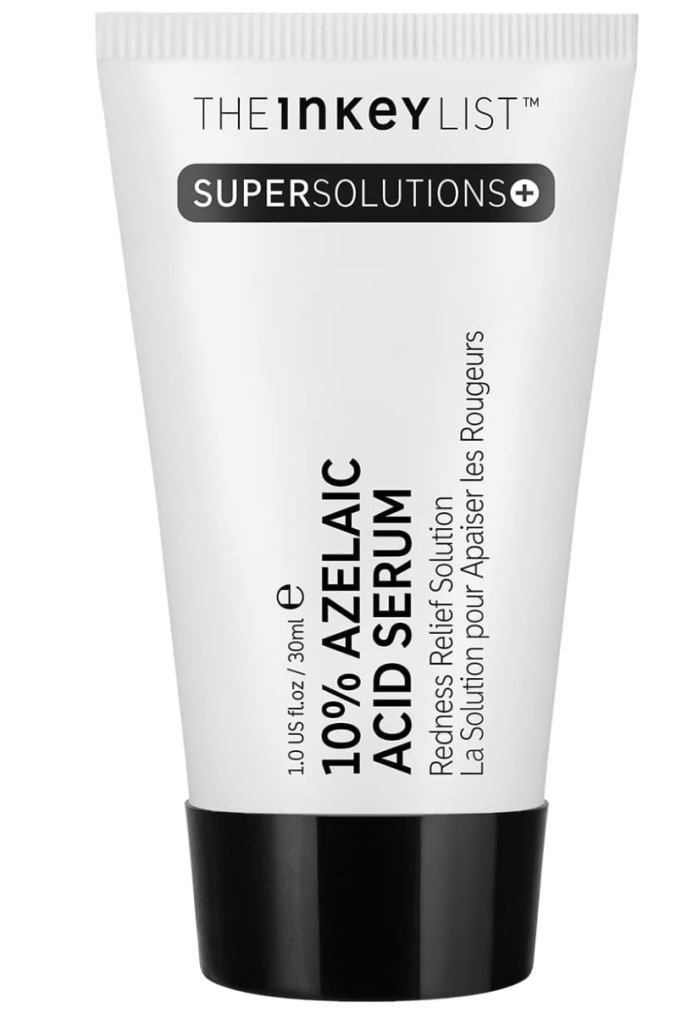
This one has a mild green tint to temporarily mask redness. Although I don’t have much redness, I’m not sure how much I buy into the efficacy of that feature. Nonetheless, you can definitely still get azelaic acid’s benefits in this 10% formula.
4. Anua Azelaic Acid 10+ Hyaluron Redness Soothing Serum
If you generally prefer Korean beauty products, Anua’s 10+ Azelaic Acid products are a great choice.
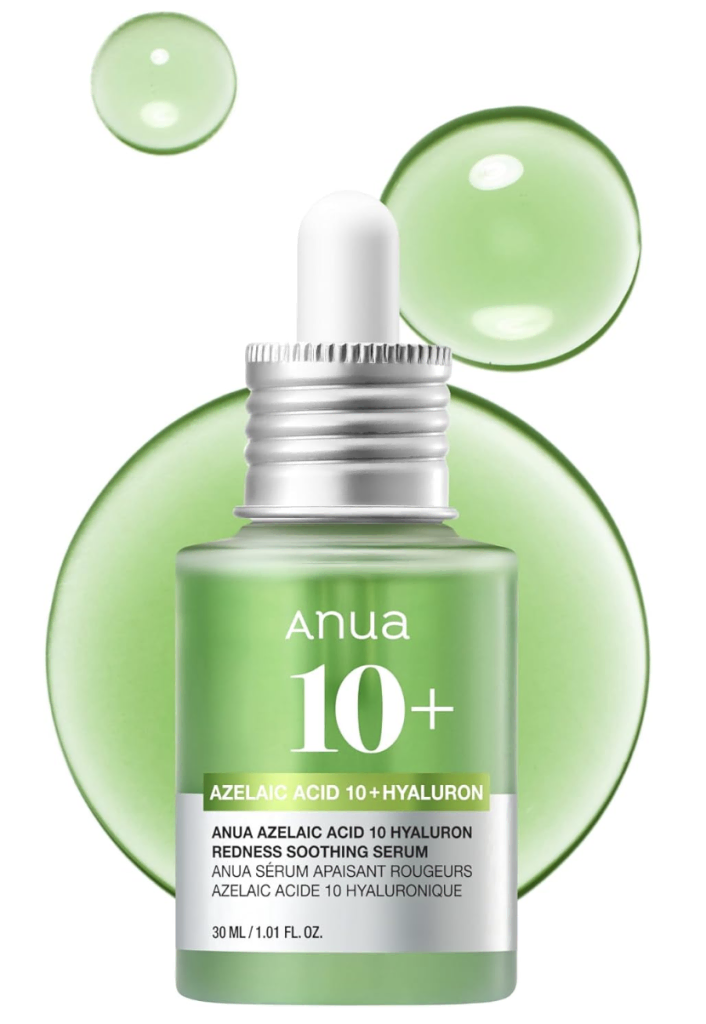
I find that Korean and Japanese skincare products generally make the best azelaic acid serums that are your typical watery serum texture, as opposed to creams. These might suit oily skin better, but it’s not a must, just a personal preference.
The Anua Azelaic Acid is combined with hyaluronic acid to add more water back into dehydrated skin, and layers more easily than cream products, I find. The texture of azelaic acid you choose is just a personal preference in your skin care routine.

However, the serum does contain niacinamide, which I’m aware not everyone likes. The good news is that they also make a toner pad formula without niacinamide.
5. Cos De BAHA Azelaic Acid 10% Serum
The Cos De BAHA Azelaic Acid 10% Serum has been quietly sitting in the background for years before azelaic acid became popular!
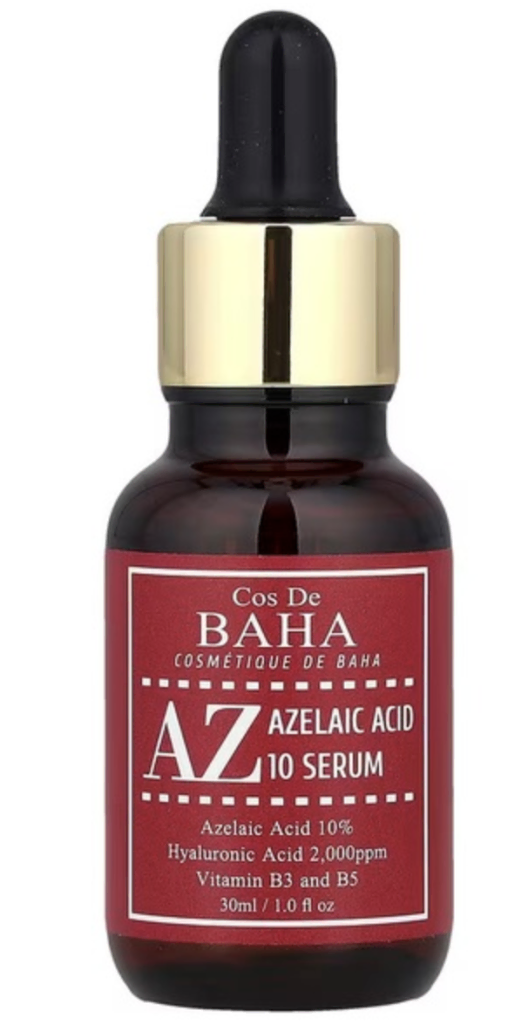
It’s a reliable little serum and a great choice if you prefer a serum with a dropper-style bottle.
I also like that this serum has very few ingredients, so it’s another good azelaic acid product for very sensitive skin. Going for products with very few ingredients in general is a good tip for very acne-prone and sensitive skin types; the fewer ingredients, the lower the risk your skin disagrees with one of them.
6. The Ordinary Azelaic Acid Suspension 10%
When I last tried The Ordinary Azelaic Acid years ago, it felt quite grainy, and I didn’t love it.
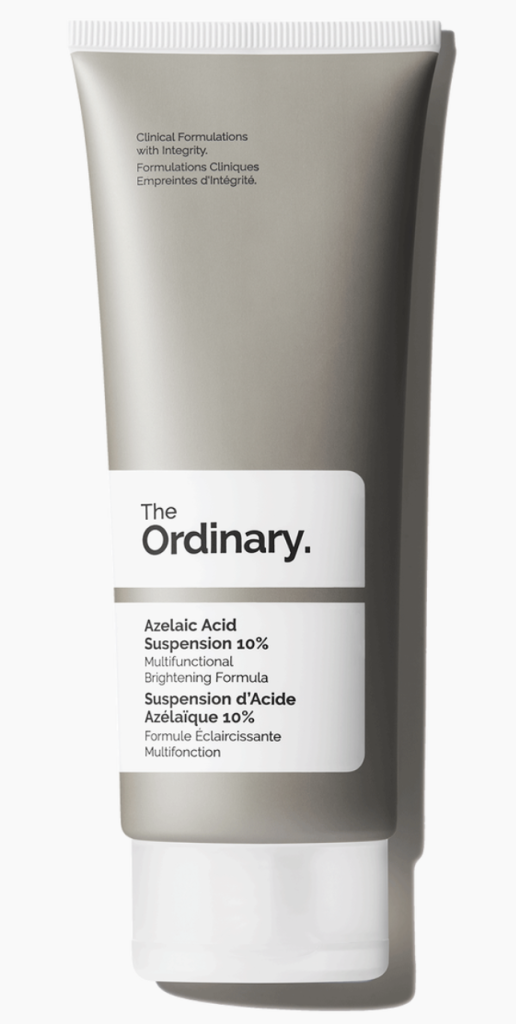
However, I have since been told that the texture has changed for the better, so it’s now a more viable budget azelaic acid product.
7. Skin1004 Azelaic Acid 10 Ampoule

If you want an azelaic acid product that’s a bit gentler and more hydrating, Skin1004’s Azelaic Acid 10 Ampoule is a really good option, especially if your skin gets irritated easily.
It’s designed to calm and support your skin at the same time, combining 10% azelaic acid with centella asiatica and hydrating ingredients. It’s great at helping with breakouts, redness, and post-acne marks without making your skin feel stripped.
8. Naturium Azelaic Topical Acid 10%

The Naturium Azelaic Topical Acid 10% is one of the nicer over-the-counter azelaic acid products if you want something that targets breakouts without completely drying your skin out.
It uses a 10% azelaic acid derivative complex alongside niacinamide, coffee seed extract and vitamin C, so it’s designed to help with acne, redness, post-acne marks, and overall uneven skin tone all at once.
I also think this is a really good option if you hate a heavy-feeling serum, because the formula feels a lot more lightweight and hydrating than some of the thicker azelaic acid creams. It sinks in nicely and layers well under moisturiser without pilling.
9. Dr. Sam’s Flawless Brightly Serum

If you have rosacea or your skin is generally quite reactive, this is a really good azelaic acid serum to look at.
Dr Sam’s Flawless Brightly Serum helps brighten the complexion, clear pores, and boost collagen as it contains azelaic acid, niacinamide, bakuchiol and vitamin C. I like that it focuses on brightening and calming the skin without relying on lots of harsh exfoliating acids.
It’s also vegan, cruelty-free, non-comedogenic and fragrance-free, which is perfect for sensitive skin.
When to Use Azelaic Acid in Skincare Routine
Now that I’ve shared my top recommendations and hopefully helped you make your choice, let’s talk about when to use azelaic acid in your routine.
If you’re wondering how to layer azelaic acid and retinol together, you’ll be pleased to hear that azelaic acid can be layered with nearly anything. However, that doesn’t mean that you should, just because you can.
Personally, I choose not to layer them and instead to use them on alternating evenings because I find my skin is less likely to develop random irritation when I am more cautious like this, and I am still really happy with my results!
It’s going to be a case of trial and error to find your perfect balance, but luckily, azelaic acid plays nicely with pretty much all other skincare actives, such as salicylic acid, glycolic acid, vitamin C and niacinamide.
The world is your oyster, but please go gently. It’s still better to keep things minimal in my opinion!
Final Thoughts on Azelaic Acid for Acne-Prone Skin
Azelaic acid is one of those ingredients that’s easy to overlook, but it can make a big difference if you’re dealing with acne, redness, or post-acne marks.
It’s effective without being overly harsh, which is why so many people get on well with it, especially if stronger actives haven’t worked for them.
The main thing is starting slowly and being consistent with it. You don’t need to jump straight to the strongest option to see results, and in most cases, starting with something like 10–15% is more than enough.
If you’d like to hear more of my opinions and product recommendations, follow me on TikTok and have a read of my Substack.
You May Also Like:
- Retinol vs Retinoid: The Best Retinoids for Clogged Pores
- The Best SPF for Closed Comedones and Acne-Prone Skin


