This site contains affiliate links. I may earn a small commission, at no extra cost to you.
In this post, I’ll explain reasons why your face burns when putting on lotion or moisturiser, specifically talking about the skin on your face (although these also apply to body skin!).
It can be frustrating when you buy new skincare products and, almost immediately, they don’t feel right.
Studies show that 40–70% of people worldwide report having sensitive skin, which often shows up as burning, stinging, or irritation when applying everyday skincare products.
Among those with sensitive skin, a common question is: Why does my skin burn when I put on moisturiser or lotion?
In short, skin burning after skincare is usually due to skin sensitivity, a damaged skin barrier, or irritating ingredients in the product.
So, we’ll talk about how to know whether it’s the wrong moisturiser, a particular ingredient, or your skin itself that’s the issue. Long story short, it can be all three!
Keep reading to find out what’s causing that unpleasant burning sensation, and when to stop using a product that burns.
The main reasons skin burns after lotion
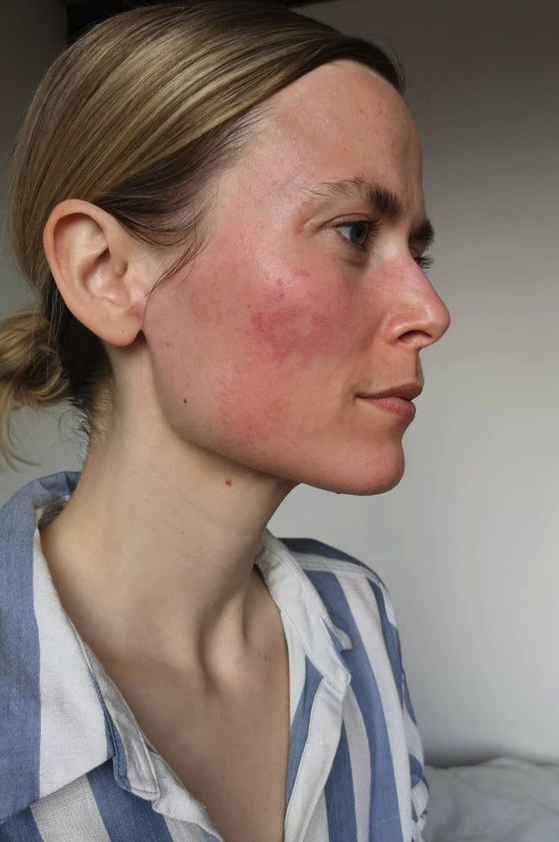
First, I’ll summarise a few of the main reasons, and then we’ll break down each cause in more detail below.
Skin burning after putting on lotion can be a result of:
- Your skin’s protective barrier is weakened, or you have pre-existing skin irritation
- You’re having an allergic reaction
- You’re sensitive to some of the ingredients, such as fatty acids
- You’re applying your moisturiser to damp skin
- Common ingredients that have a bad rap for skin sensitivity
How a damaged skin barrier can cause a burning sensation
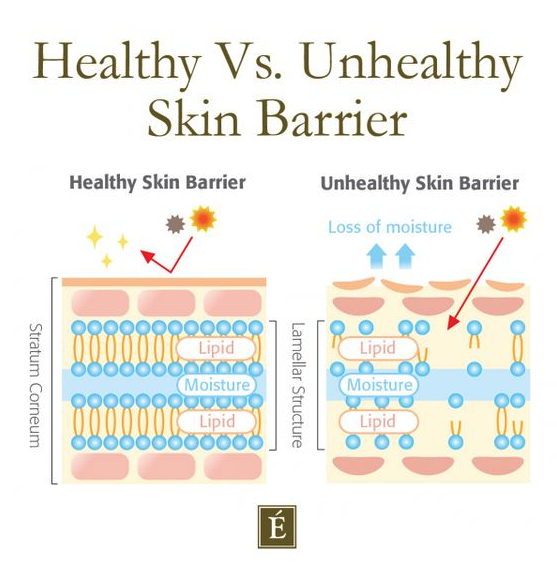
Source
A damaged skin barrier is probably one of the most common causes your face burns when putting on lotion, or after putting on moisturiser. Our skin has many layers to it, and when the outermost layer of skin gets degraded, it can cause a lot of stinging, redness and dryness.
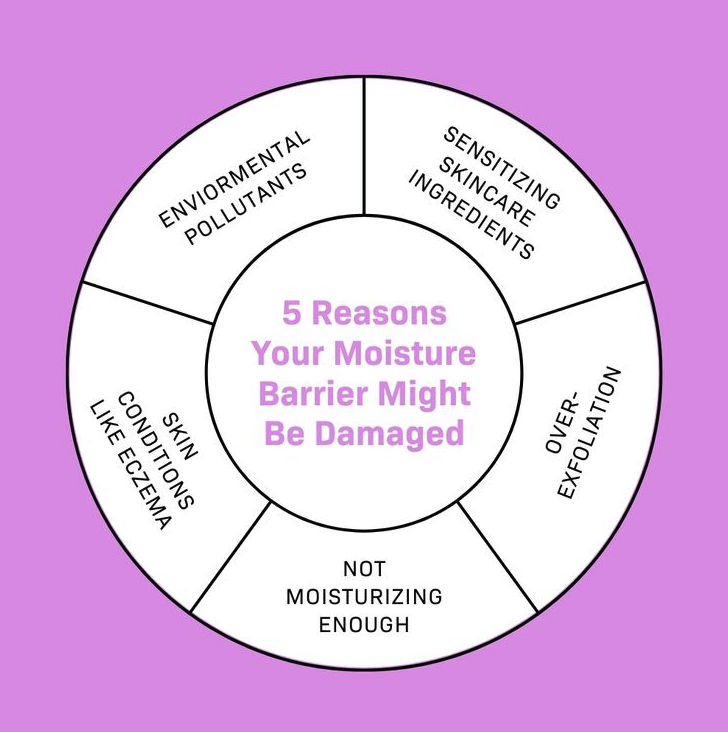
Common things that weaken the skin’s protective layer include:
- Using a lot of exfoliating acids, such as salicylic acid and glycolic acid (both alpha-hydroxy acids)
- Cleansing either too much or using a harsh cleanser that strips your skin
- Exfoliating with a physical scrub too often or too aggressively
- Having super hot showers or using hot water to cleanse with
- Using a lot of spot treatments repeatedly
- Using products that contain essential oils and artificial fragrances
Usually, for most people, it’s a combination of all of them, and you can help to protect your skin’s barrier by using skincare products for a damaged skin barrier.
The key is to use it all year round, even when your barrier is feeling healthy. Many people make the mistake of only using a barrier product when their skin feels unhappy, and by then it’s already too late! I use mine twice a day, every day.
How to heal a damaged skin barrier
Source
Of course, it is possible to rectify the mistakes above. To heal a damaged skin barrier, you’ll need to:
- Only use exfoliating acids when you need to, a few times a week maximum.
- Make sure your scleanser is gentle. Here are my top gentle water-based cleanser recommendations.
- Don’t use a physical exfoliator like a scrub, because it’s an inefficient and harsh type of exfoliation.
- Use tepid water instead of hot water to cleanse.
- Only use spot treatments on the spot itself, and use a very thin layer rather than a huge blob (you’ll save money with this tip, too!).
- Cut out products that contain artificial fragrances and essential oils, as these can cause skin sensitivities.
Signs you have a damaged skin barrier
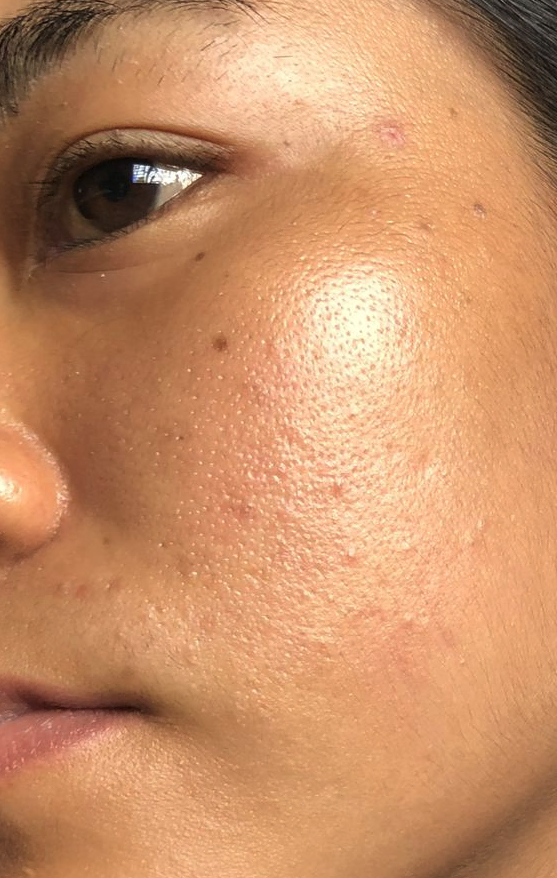
Source
If your face burns when putting on lotion and you think you might have a damaged skin barrier, here are some tips to figure that out.
Funnily enough, one of the top damaged skin barrier signs is a stinging sensation from products that never used to make your face burn. For me, this is one of the top telltale signs – the fact that these products never used to cause this for you, but now suddenly sting. This suggests that once you heal your barrier, the products will go back to not stinging.
Another sign is itchy skin – skin can feel dry and tight, yet oily at the same time. This is due to water loss, otherwise known as trans epidermal water loss (TEWL). Basically, the outermost layer of your skin is not keeping moisture in as it should and therefore is overproducing natural oils.
All of this can lead to extra breakouts, especially breakouts in areas you don’t normally break out!
To restore the balance, I recommend quitting retinoids, exfoliants and vitamin C for at least 1-2 weeks. Focus on using a gentle cleanser, moisturiser and SPF. A barrier serum would be helpful here, too.
Can an allergic reaction be the reason your face burns when putting on lotion?
Source
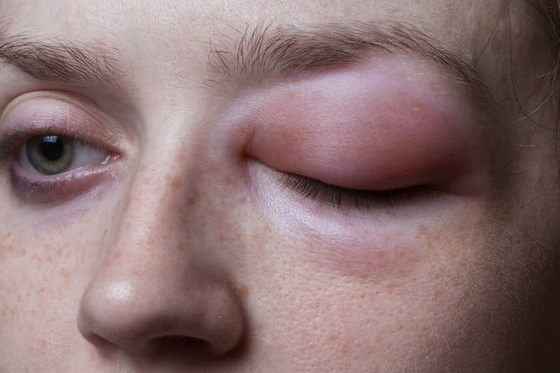
Short answer, absolutely! Allergic reactions range from minor to severe, so even if your face isn’t swelling up massively, an allergic reaction can still be a possible cause. I often get comments on social media, asking me if a new product is stinging their face, and whether they should keep using it. Personally, it’s an easy ‘no’ for me.
If it were an older product and you’ve used it before without issues, it’s unlikely to suddenly be that product (it’s more likely your skin). However, if it’s a brand-new product and your skin seems fine otherwise, it’s probably the skin care product’s fault.
For what it’s worth, I often have this with Cerave products, especially the hydrating cleanser. Furthermore, burning should also be noted as a warning sign – ‘keep using this product at your own risk’. In other words, it might get worse the longer you use it. Either way, nothing good is coming from it.
Other signs of an allergic reaction include:
- Swollen face or features, such as the eyes
- Weeping skin
- Blisters or wounds
- Swollen throat or tongue
If this happens to you, please seek medical care!
Very sensitive skin people, you probably already know this, but make sure you patch test! Even the best moisturisers can cause reactions, it doesn’t make it a bad moisturiser, our skin is just so unique to all of it that… sh*t happens quite frankly.
Applying moisturiser to damp skin can also cause burning
Source
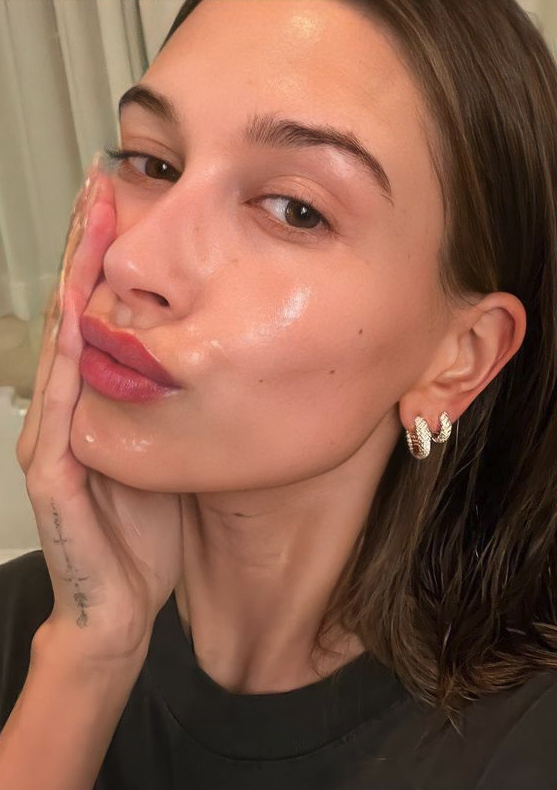
This is one of those catch-22 situations. Applying moisturiser to damp skin can increase absorption, as hydrated skin is more permeable and allows ingredients to penetrate more easily. However, it’s not always a good idea if you have a skin type that is particularly sensitive.
Speeding up the absorption process by applying moisturiser to damp skin can be overkill for sensitive skin, so try applying your moisturiser to dry skin if this happens to you a lot.
You may also find that you get the classic moisturiser burn sensation sometimes and not others. This could be due to a weakened barrier at times, rather than continuously sensitive skin.
Even if you don’t use many skincare actives, this could occur due to changing temperature and humidity, for example. I mention this because skin is very multifactorial, meaning it’s often not just one single thing, but a combination of factors.
Slugging with Vaseline and irritated skin
Source
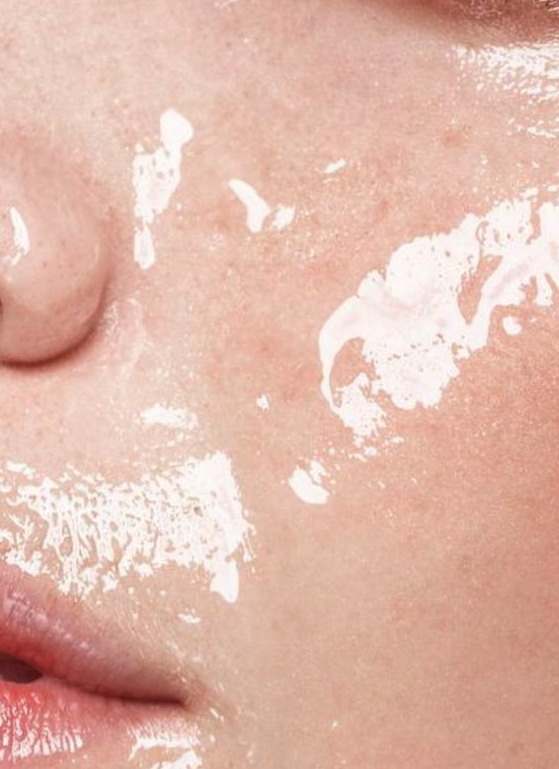
I thought it would also be worth mentioning how slugging can sometimes also cause irritated skin. Slugging is basically where you apply petroleum jelly (also known as petrolatum, AKA Vaseline) as the final layer of your skincare routine to lock everything in.
This normally works well, but if done over retinoids like tretinoin or retinol, slugging can actually cause more irritation. This is because Vaseline is an occlusive and essentially will cause enhanced penetration of the active. If your face burns when putting on lotion, consider cutting back on this approach.
This sounds good, but with something as irritating as tretinoin, it’s not always desirable. To conclude this, you basically might be causing redness and burning because of slugging, even if it seems counterintuitive.
Common ingredients that may cause burning
Nowadays, it’s almost like we’re shamed if we don’t use ingredients like salicylic acid and vitamin C, but I want you to know that you don’t *need* any of these ingredients for good skin. Plus, they’re a major reason your skin burns when putting on lotion.
Everyone’s skin needs different things, and I actually found much better luck when using a retinoid on its own.
Hyaluronic acid
Source
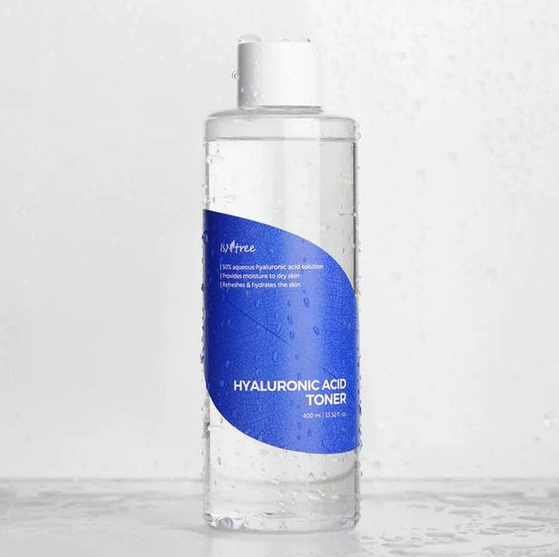
Not only can using too many of these break down the outermost layer of the skin, but they can also cause that familiar burning sensation. A particularly interesting ingredient that can sometimes cause this is hyaluronic acid.
Some research suggests that low molecular weight hyaluronic acid may be more irritating, as its smaller molecules penetrate deeper into the skin and can trigger inflammatory responses. All this means is that, because the molecules are ‘smaller’, they can penetrate deeper.
Again, this sounds good, but it’s actually not what you want at all times. Especially when coupled with not sealing the HA in, this can be a recipe for redness and irritation.
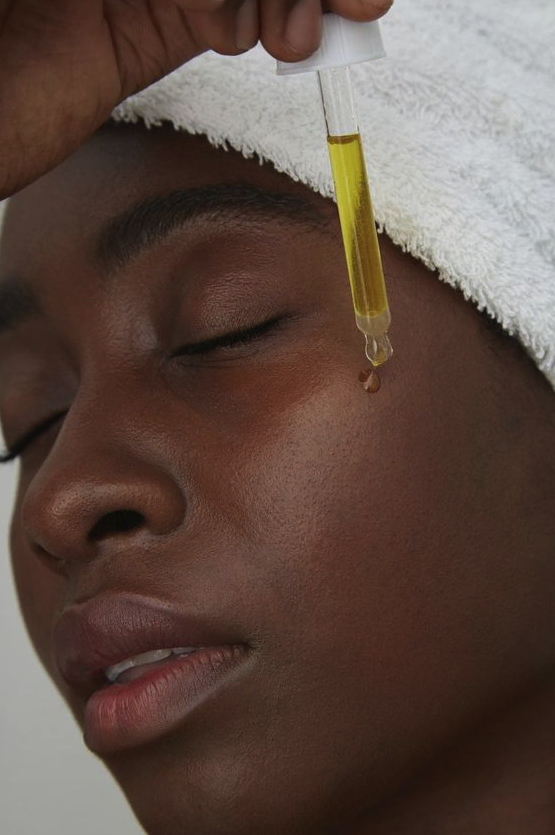
Vitamin C
Source
Many of the most common forms of vitamin C, particularly ascorbic acid, are unstable and can easily degrade when exposed to air, light, and heat. This means that they can go rancid pretty quickly. On top of this, vitamin C is actually somewhat irritating itself.
A lot of dermatologists recommend quitting vitamin C until acne is under control, because otherwise it creates a difficult environment to treat the acne in. Personally, I never got along with vitamin C too well, always finding it worked for a little bit before causing little red pimples.
If you’re keen on using an active ingredient but are experiencing burning, I recommend cutting out a lot of them and slowly adding them back in, one by one. This way, it’ll be easier to find the culprit.
If skin burns when putting on lotion, should you stop using the product?
Finally, here are my top tips for how to decide whether the product isn’t right, or it’s your skin:
- If you’ve never used it before and it stings on the first try, ditch it
- If you’ve used it many times before and it has previously been fine, keep it, but consider working on your skin barrier (that protective top layer of the skin)
- If you’re using acids more than twice a week, be suspicious that your skin barrier might need work
- If you apply the moisturiser to damp skin, consider trying it out on dry skin instead
This was: Why Does My Skin Burn When I Put on Lotion or Moisturiser?
You may also like:
- Vanicream Gentle Facial Cleanser Vs Cetaphil Cleansers
- Can You Use Salicylic Acid Face Wash with Differin Gel?
- The 15 Best Cleansers to Use with Tretinoin & Retinol